







MUSCAT MAY 17
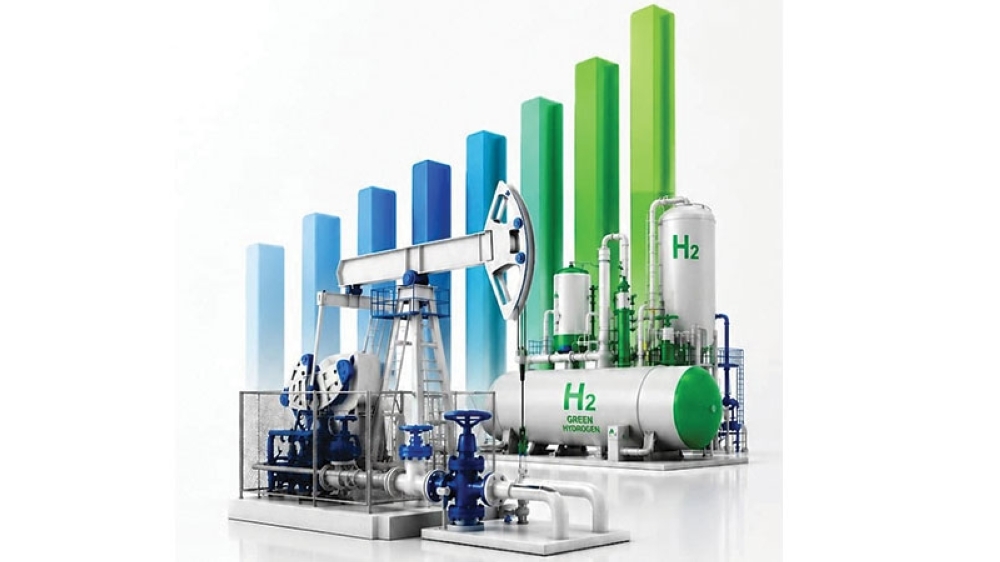
Oman is accelerating its transition from a hydrocarbon-driven economy towards a future anchored in green hydrogen, renewable energy and lower carbon emissions, as the Sultanate of Oman seeks to balance energy security with long-term sustainability goals.
The country’s oil and gas sector continues to play a central role in supporting economic growth and public finances, while new investments are being channelled into clean energy infrastructure and decarbonisation initiatives. According to a post by the Ministry of Economy (MoE), the oil and gas sector contributes 68 per cent of the 2025 state budget, underlining the continued importance of hydrocarbons to the national economy.
The ministry highlighted that Oman currently manages a pipeline network extending more than 7,000 kilometres and is implementing 1,275 development projects valued at RO 74 million. The sector also maintains a high Omanisation rate of 92 per cent, reflecting efforts to strengthen local workforce participation in strategic industries.
Oil production stands at around 1.002 million barrels per day, while gas output has reached approximately 151.2 million cubic metres daily, according to the figures released by the ministry. Oman is also developing 28 mining concession areas as part of wider diversification efforts linked to industrial growth and resource development.
At the same time, the Sultanate of Oman is intensifying investments in renewable energy and hydrogen projects to position itself as a major regional exporter of clean fuels. The Ministry of Economy stated that Oman plans for renewable energy to account for 10 per cent of the energy mix by 2026, marking a significant milestone in the country’s energy transition roadmap.
The ministry added that Oman is investing around $44 billion in green hydrogen projects, reinforcing the sector’s role as a key pillar of Oman Vision 2040 and the national net-zero strategy. The country aims to produce up to one million tonnes of green hydrogen annually by 2030, leveraging its abundant solar and wind resources as well as its strategic location near major shipping routes.
Oman has already attracted substantial interest from international developers and energy firms seeking to establish large-scale hydrogen and ammonia production facilities, particularly in Al Duqm and Dhofar. The government has also launched supportive frameworks and regulatory mechanisms to facilitate investment in the emerging industry.
As part of broader climate commitments, the ministry said Oman targets a 33 per cent reduction in emissions by 2035. The Sultanate of Oman has also introduced the “Meezan” platform to manage carbon markets and support carbon trading mechanisms aligned with international sustainability standards.
The clean energy push is expected to complement, rather than replace, Oman’s conventional energy sector in the near term, with policymakers pursuing a balanced transition that safeguards revenues while preparing the economy for a lower-carbon future.
Through its combined investments in hydrocarbons, renewable energy, mining and hydrogen, Oman is seeking to strengthen its position as a regional energy and industrial hub while advancing towards its long-term target of achieving net-zero emissions by 2050.
Oman Observer is now on the WhatsApp channel. Click here


